October 08, 2026


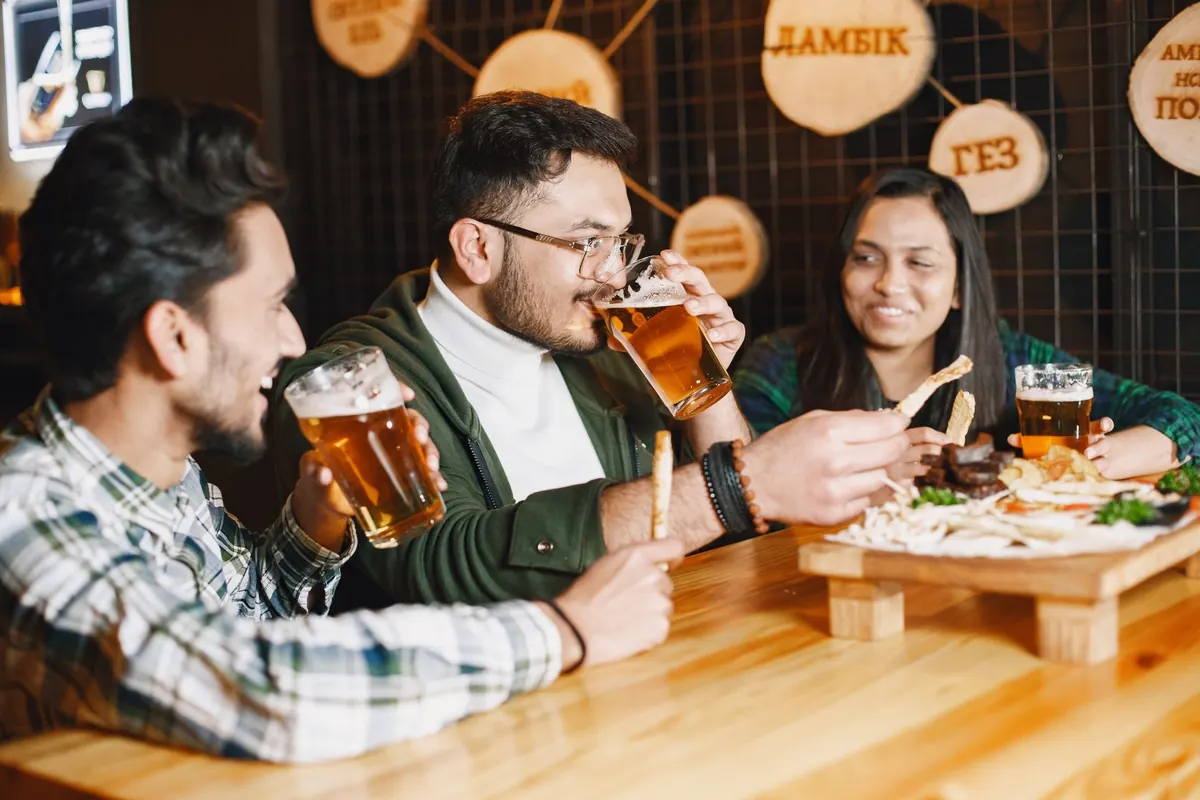
Organizing a pub crawl for a birthday should feel like planning a good party, not a military exercise. The crawls people remember share three things: a route that makes sense on foot, a pace that leaves room to actually talk to someone, and one person who keeps half an eye on the group without behaving like a tour guide. Get those right and the details tend to sort themselves out. Here's how to build a night that ends with everyone having the same good story.
Group size decides everything else. Six people can wander into almost any pub and find a corner. Fourteen need a plan, a reserved spot at the first stop, and a firm route, because nothing kills momentum faster than a crowd standing on a pavement arguing about where to go next.
Eight to fourteen is the comfortable range. Beyond that, the group fractures into separate conversations and separate venues, which is fine if you accept it and frustrating if you don't. If your list is bigger, send two teams along the same stops in a different order and reunite at the final pub.
Before you choose anything, ask:
That last point matters more than people admit. A crawl with an eleven o'clock cut-off is a different night from one with no end time, and knowing it in advance stops half the group quietly vanishing at the third stop.
Pick the final stop first, then work backwards. The last venue should be the easiest one to leave — near a station, a taxi rank, or a bus route — because nobody wants to solve a complicated journey home at the end of a long night.
From there, keep it tight. Four or five stops is plenty, and ten minutes of walking between venues is the realistic maximum; five is better. A route that zigzags across town sounds adventurous and feels exhausting, and you lose people in the gaps.
If your group is twelve or more, ring the first and last venues a week ahead. A quick call about numbers and arrival time is worth more than any amount of improvisation later.
Forty-five to sixty minutes per stop works well. Shorter, and people are still finishing their drinks when you call the move. Longer, and the night sags.
Give a soft departure time rather than a military one — "we'll head on around nine" — and say it out loud before you leave. A message in the group chat as you walk out of the door catches anyone who drifted.
Starting between six and seven in the evening leaves room for four stops without pushing the night past midnight. For a milestone birthday, expect things to run slower than you planned and build in the slack.
Decide the meeting point before the day: a named pub, a station entrance, a landmark everyone can find. Send it once, in words, not as a photo of a map with a circle drawn on it.
At the end of the night, nobody drives. Agree on the way home in advance — last trains, night buses, or splitting rideshares — and share a pin for the finish point so latecomers and early leavers can rejoin. If someone is worse for wear, make sure they travel with a friend rather than alone. Check local licensing and transport rules for your area, and if the evening involves anything beyond ordinary social drinking, encourage people to look after one another and take proper advice where health or safety is concerned.
You can't stop people from wandering. You can make wandering easy to fix.
The organizer shouldn't also be the person counting heads every ten minutes. Hand that job to a willing friend so you can enjoy your own evening.
Eat before you start, or make the first stop a pub that serves proper food. Drinking on an empty stomach is the most common reason a good crawl ends early.
Keep money simple. Splitting one bill fourteen ways invites awkwardness. Let people buy their own drinks, or agree that everyone covers their own and the group covers the birthday person's. Contactless is standard in most pubs, but a little cash still helps in smaller venues.
Small things improve the night more than you'd expect: seats at the second stop, a garden at the third, a bag of chips on the walk between two venues, and a plan for coats so nobody leaves a jacket behind at stop two.
Confirm numbers. Call the busiest venues. Post the route, the meeting point, and the finish time in the group chat. Check the forecast if there's walking involved, and line up a rain-friendly alternative for the middle stretch. Charge your phone and bring a power bank, because the person with a dead battery is the person nobody can find.
Then let the plan do its work. A good pub crawl isn't a perfect itinerary; it's a route good enough to keep people moving and loose enough to let the night become whatever it wants to be.
Photo: Gustavo Fring / Pexels
Your happy place for drinks and good company.
Copyright © 2026 Cheerful Pub. All rights reserved. Cheerful Pub.